Our Impact

At Alturas, saving wildlife is just the beginning.

We rescue, rehabilitate and release animals native to Costa Rica – but our mission goes far beyond that.

Through our year-round education program, we work to prevent human-wildlife conflict and build a future where people and animals can coexist safely.

We also strengthen our conservation impact through ongoing research that helps protect species and ecosystems across Costa Rica

Our Education Program Making a Difference

Tours

Visitors from across the world come and tour our sanctuary, where they see our animal residents and learn their stories. Each of our residents is unfortunately, unable to return to the wild. We hope that by educating people about their stories, we can prevent these incidents from occurring.

Outreach

From events to low-resource schools across Costa Rica, we are committed to educating young minds about wildlife. We believe that through education, we can prevent future human-wildlife conflict.

Conservation Research In Action

Tracking Rehabilitated Ocelots Post-Release

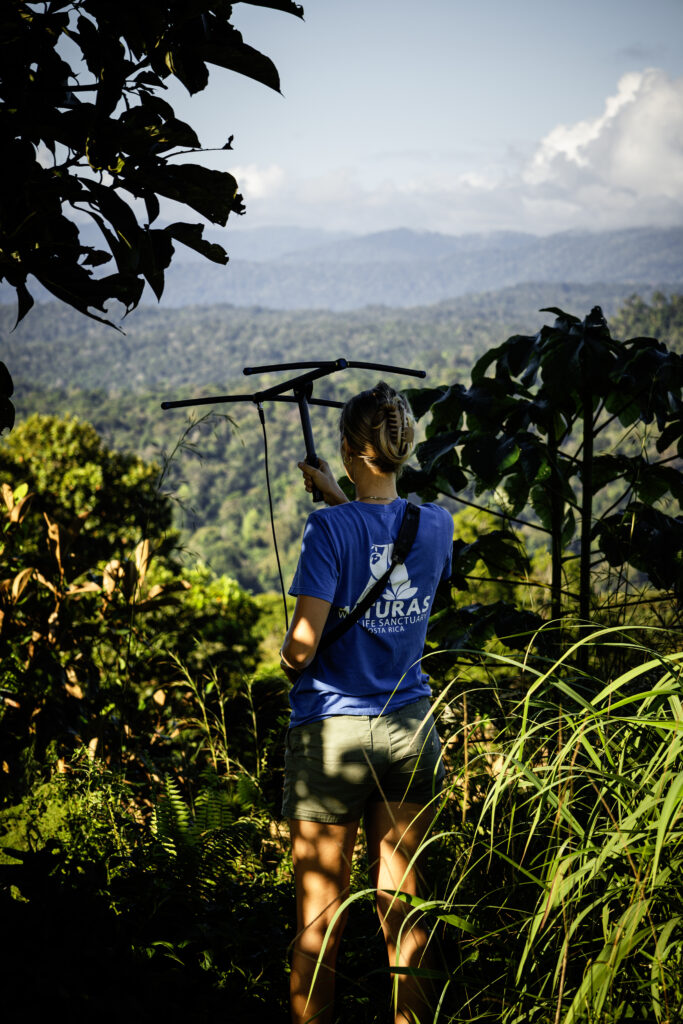
In 2022, we received a young male ocelot that had survived a vehicle collision along the Pacific coast of Costa Rica. After stabilizing him and confirming he was a strong candidate for return to the wild, the team collaborated with researchers to prepare him for release, including fitting him with a GPS/VHF collar. This collar allowed us to monitor his behavior and movements once he was back in his natural environment, something that is extremely difficult to observe directly in secretive, mostly nocturnal felids.  

Following his release on the Osa Peninsula, six months of GPS data offered rare insight into how rehabilitated ocelots reintegrate into the wild. The ocelot displayed a clear exploratory phase during the first 75ish days, followed by the establishment of a more defined home range. He frequently selected mixed agricultural-forest landscapes rather than primary forest, mirroring patterns seen in wild ocelots living near human-modified areas. This study, led by our team in collaboration with regional partners, contributes valuable information to the scientific community and helps improve decision-making for future felid rehabilitation and release efforts in Costa Rica’s biodiverse landscapes.

How Camera Tracking Protects Biodiversity

To better understand local wildlife populations, we maintain a network of camera traps placed throughout nearby private properties. These cameras document the incredible biodiversity of the region, from small mammals and birds to large predators, while helping us detect changes over time.

Camera trap data allows us to track wildlife presence, behavior, and habitat use, creating a clearer picture of how species move through human-altered landscapes. This information supports conservation planning, guides education efforts, and strengthens collaborations with landowners who play a key role in protecting wildlife corridors.

Rope Bridge Research and Monitoring

In January 2024, Alturas Wildlife Sanctuary, in collaboration with Somos El Cambio, ICE and local conservation partners, installed two wildlife rope bridges over Route 34 (Costanera Sur). The bridges were strategically placed, combining data on roadkill hotspots and electrocution records to reduce risks for arboreal wildlife. Bridge 1 consists of two green plastic ropes and Bridge 2 of one rope, both positioned 6.5 meters high and spanning 20 meters. Camera traps were installed to monitor wildlife use and behavior.

Early results show rapid and diverse wildlife activity. Within one week, Bridge 1 recorded its first use by a white-face capuchin, followed by more than 80 videos in the first month and a half, including capuchins and woolly opossums. Over the next two months, Bridge 1 produced 2,618 additional images, revealing regular crossings. Bridge 2 showed less activity, with 203 videos between April and July, mostly woolly opossums and other small mammals. 

These findings help refine future bridge designs and placement to improve safe wildlife passage.
Collaborations